Resources
Search below for resources covering the intersection of climate engagement, social science and data analytics.
RESULTS
Offshore wind farms: policymakers are more influenced by reports that accentuate negative impacts – new study
Policymakers rely less on academic research on offshore wind than they do on other reports, which present more negative effects of offshore wind. For offshore wind farms, decision-makers more frequently rely on “grey literature” such as environmental statements, impact or habitat risk assessments, survey reports, social studies, and pre- and post-construction reports. 71% of outcomes reported in grey literature for the impacts of offshore wind farms are negative, compared with 36% in primary literature.
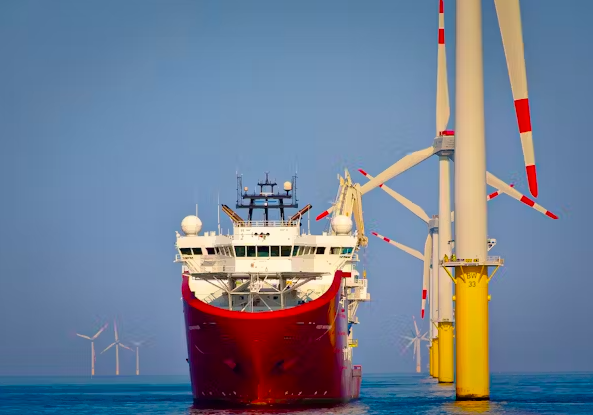
Americans in coastal counties have overwhelmingly positive attitudes about offshore wind energy and support offshore wind near where they live. Energy independence is a strong rationale for expanding offshore wind, though there are concerns about impacts on wildlife. Surveying Americans who live in coastal counties, they find that these Americans have overwhelmingly positive attitudes about offshore wind and its expansion – including in their own areas: 68% support the construction of offshore wind farms to harness wind; energy in U.S.

Poll: Support for Wind Energy Plunges
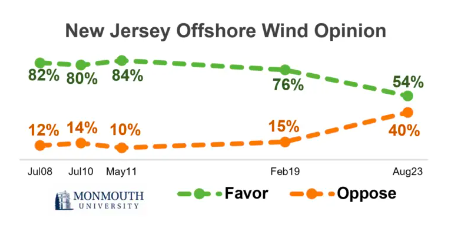
Declining support for offshore wind in New Jersey shows the dangers of misinformation about renewable energy. Just over half of New Jersey residents (54%) favor placing electricity-generating wind farms off the state’s coast while 40% oppose this action. In 2019, wind energy support stood at a much higher 76%, with just 15% opposed. Prior to that, support for offshore wind farms was even higher, ranging between 80% and 84% in polls taken from 2008 to 2011.
Poll: A Majority of Voters Believe Climate Change Will Increase Costs
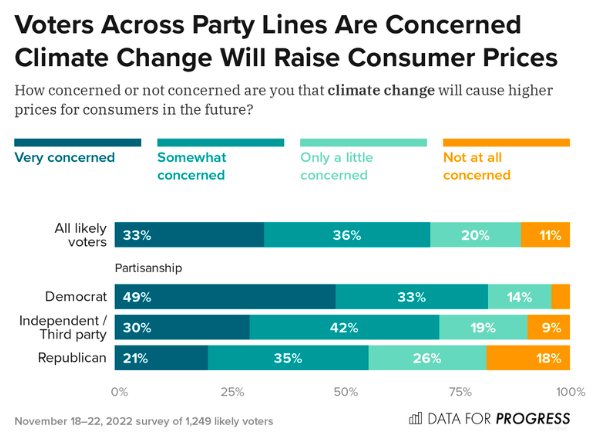
Voters are worried that climate change will increase the cost of living, but have hope that the expansion of renewables will bring down energy costs. 69% of all likely voters believe that climate change effects will increase costs for consumers. 70% of Americans believe that expanding renewable energy production, like wind and solar power, will bring energy costs down (including 88% of Democrats and 53% of Republicans).
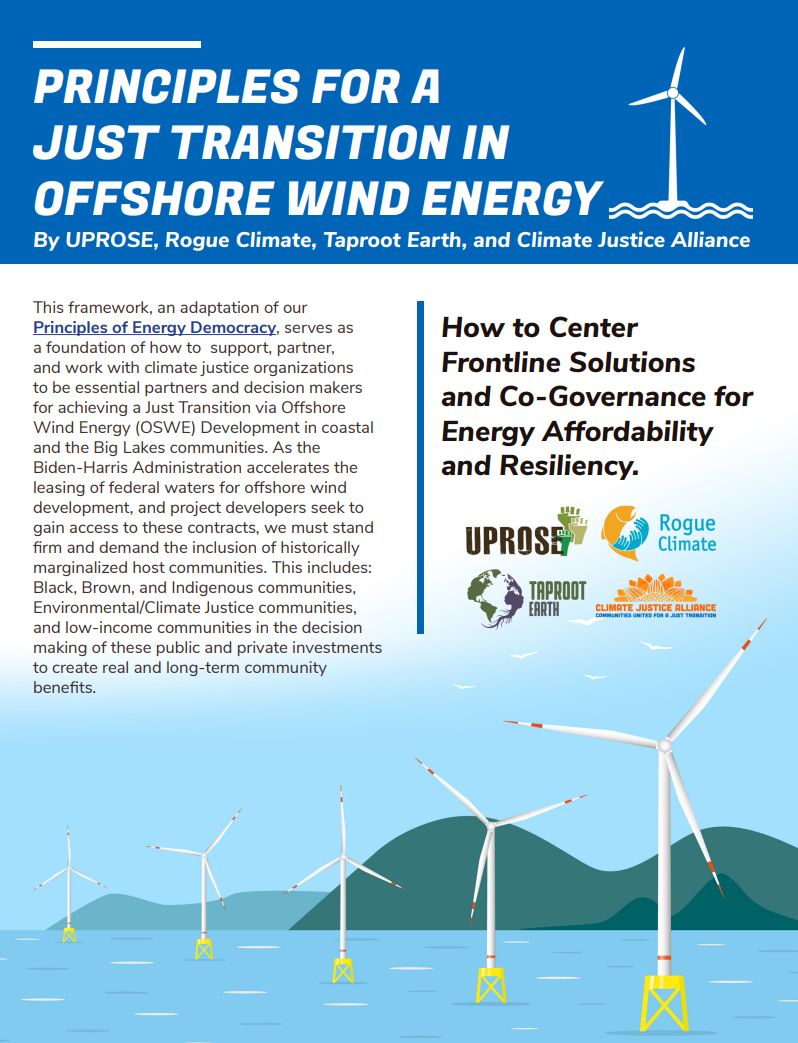
Principles for a Just Transition in Offshore Wind Energy
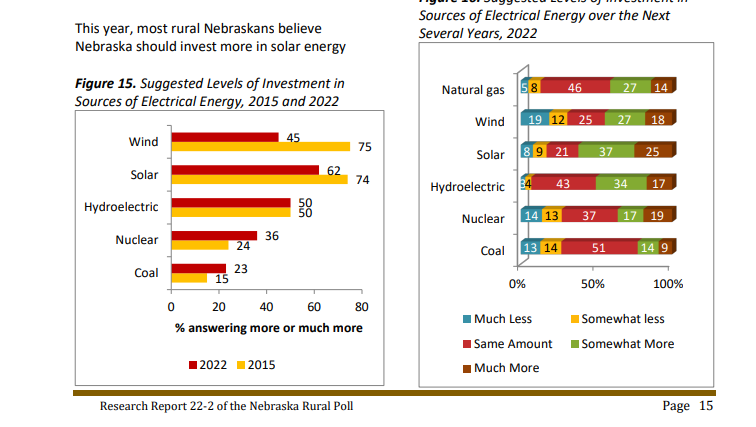
Poll: Nonmetropolitan Nebraskans’ Opinions about Water, Climate, and Energy
Analysis of the Nebraska Rural poll revealed interesting insights about climate, energy, and water issues:
Environmental Polling Roundup - September 9th, 2022
This post includes climate and environment headlines, data points, and key takeaways from recent public polls - including new polling on the Inflation Reduction Act, attitudes toward the country’s major domestic energy sources, and a new paper on the behaviors and perceptions that correlate the most strongly with changes in climate attitudes.
Poll: Support for Nuclear, Wind, and Solar Trending in 2022
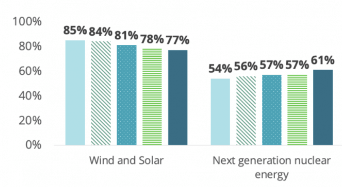
Wind and solar remain Americans’ most favored energy sources, while support for nuclear energy continues to trend steadily upward. Americans are far less likely to blame gas for pollution and climate change than other fossil fuels. 77% of Americans say the United States should be spending more money over the next few years on the research and development of wind and solar energy. 76% of Americans recognize that oil contributes to unhealthy air pollution and climate change. 73% of Americans recognize that coal contributes to unhealthy air pollution and climate change.
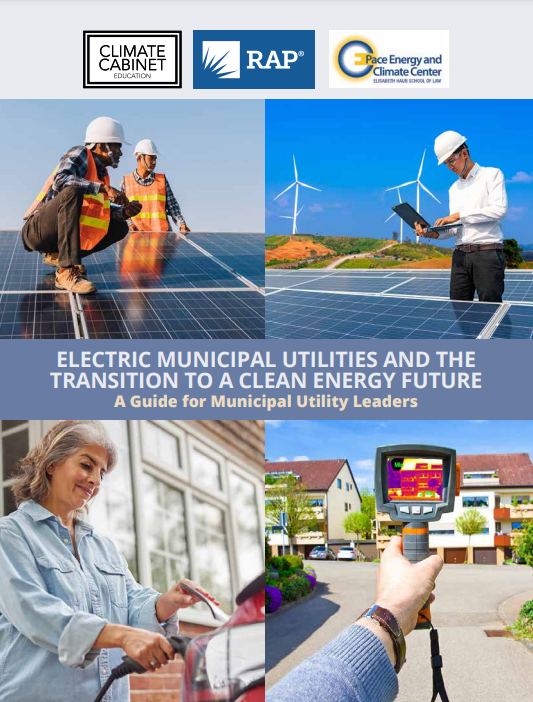
A Guide for Municipal Utility Leaders: Electric Municipal Utilities & the Transition to a Clean Energy Future
Transitioning to clean energy can create a more flexible, economic, and resilient electricity system. Small and mid-sized cities can enjoy safer, cleaner, more reliable, and more affordable service. Municipal utility leaders face unique challenges and opportunities when it comes to making the most of this transition. This resource is designed to provide a guide for municipal utilities seeking to make responsible, forward-looking planning decisions and investments within a clean energy transition while meeting their bedrock obligations to ensure reliable service in an economic manner. Benefits to consumers can include lower utility bills, healthier homes, and reduced energy burdens, especially for low-income residents. Benefits to communities can include local jobs, cleaner air and water, healthier communities, and climate change mitigation and resilience. Benefits to utilities can include cost savings, lower financial risk, reduced policy risk, energy security, resilience to weather disasters, and protection from fuel supply shortages.
A Guide for Cooperative Leaders: Rural Electric Cooperatives and the Transition to a Clean Energy Future
Rural electric cooperatives are foundational institutions within their communities. Cooperatives serve as energy providers and a cornerstone of economic development and community well-being. Today, the electric utility industry — including rural cooperatives — is undergoing a transformation that is on par with some of the biggest industrial transformations in history, and cooperative directors are on the forefront of that transition. This paper is designed to provide a guide for electric cooperative directors seeking to make responsible, forward-looking planning decisions and investments within a clean energy transition – while delivering more flexible, resilient, and economic service to member-owners. Rural electric cooperatives ground their work in the seven cooperative principles: Open and voluntary membership; Democratic member control; Members’ economic participation; Autonomy and independence; Education, training and information; Cooperation among cooperatives; Concern for community.