Resources
Search below for resources covering the intersection of climate engagement, social science and data analytics.
RESULTS
Poll: Voters Across Four States Show Broad Support for Clean Energy, Carbon Removal
Voters widely support carbon dioxide removal (CDR) projects in key states where they are being considered, and see improved air quality as the clearest benefit of these projects. While voters aren’t very familiar with CDR, they are inclined to feel positively about the technology. In Wyoming, for example, NWF and Data for Progress find that 57% of voters feel favorably about “carbon dioxide removal technologies” when the term is first introduced in the survey while only 16% have unfavorable attitudes about the term.
Voters in key states want stronger limits on methane emissions, and believe that implementing technology to limit methane pollution is more likely to create jobs than reduce them. By a 68%-26% margin, battleground state voters support stronger EPA limits on methane emissions from the oil and gas industry. By a 69%-27% margin, Pennsylvania voters support stronger EPA limits on methane emissions from the oil and gas industry. By a 66%-28% margin, Texas voters support stronger EPA limits on methane emissions from the oil and gas industry. By a 55%-41% margin, battleground state voters are more likely to agree that stronger methane pollution limits will create jobs than reduce jobs. By a 56%-42% margin, Pennsylvania voters are more likely to agree that stronger methane pollution limits will create jobs than reduce jobs. By a 58%-42% margin, Texas voters are more likely to agree that stronger methane pollution limits will create jobs than reduce jobs.

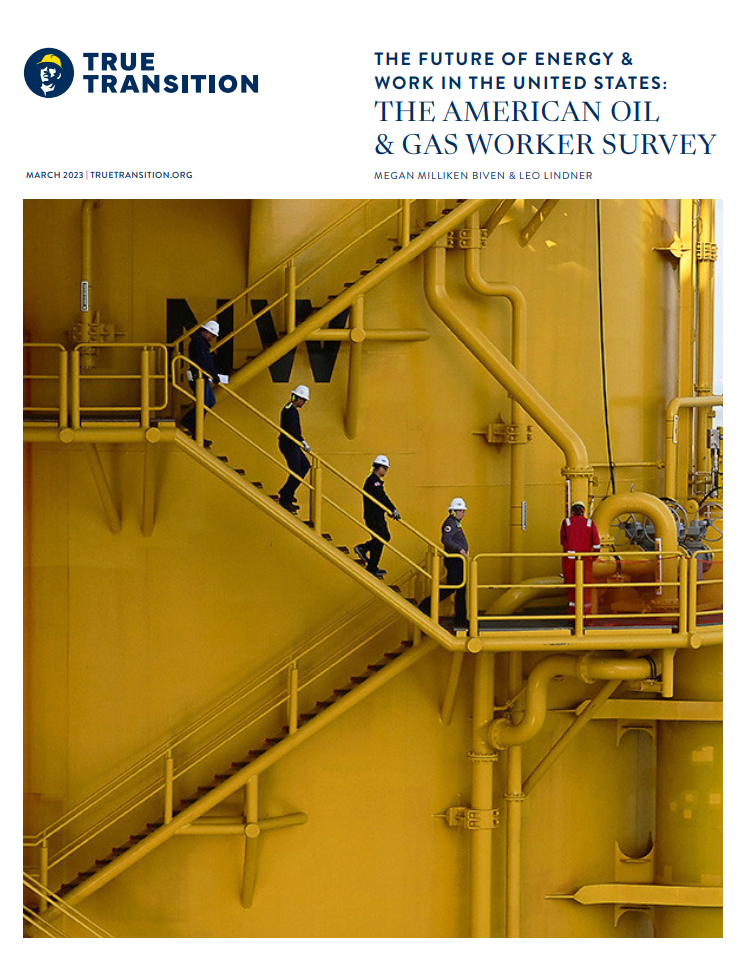
The Future of Energy & Work in the United States: The American Oil & Gas Worker Survey
Cross sectional survey of 1,635 non-management oil and gas workers in the US revealed new insights and key themes relevant to a truly "just transition" from fossil fuels, including:
Environmental Polling Roundup - December 23rd, 2022
This post includes climate and environment headlines, data points, and key takeaways from recent public polls - including new state-level polls in Texas and Nebraska.
Poll: Between the Election and the Looming Session, Poll Finds Texans Skeptical of State Government
The majority of Texas voters recognize that climate change is happening, and pluralities say that the state government and businesses aren’t doing enough to address it. 62% of Texas voters recognize that climate change is happening, while just 23% deny it. Texas voters are more than twice as likely to say that the state government is doing too little to address climate change (41%) as to say that the state government is doing too much (16%).

Environmental Polling Roundup - October 7th, 2022
This post includes climate and environment headlines, data points, and key takeaways from recent public polls - including new polling on the two parties’ approaches to climate change; the connection between hurricanes and climate change; and energy issues in Texas.
Poll: Texas Voters, Feeling the Pinch of High Home Energy Prices, Support Investments to Improve the Grid
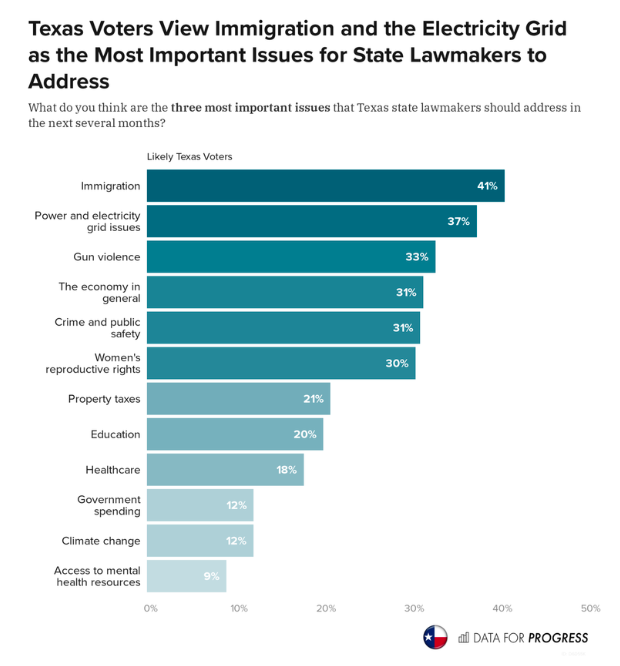
Texas voters continue to say that the state government isn’t doing enough to protect Texas from climate change, but are confused about who to blame for the state’s energy problems. Texans who are experiencing higher home energy prices are about equally likely to say that President Biden (54%) and the Electric Reliability Council of Texas (56%), or ERCOT, deserve a “great deal” of blame for their higher energy bills. When they are informed that the Texas electricity grid is independent and therefore not subject to regulation by the federal government, however, Texas voters are 26 points more likely to say that ERCOT deserves a “great deal” of blame (65%) than President Biden (39%).
Environmental Polling Roundup - June 10th, 2022
This post includes climate and environment headlines, data points, and key takeaways from recent public polls - including new national polling on climate change, plastic pollution, and the seafood industry as well as new state polling in Texas about the state’s energy policies.
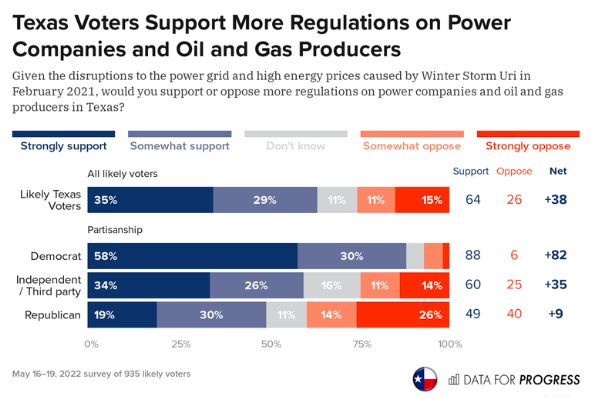
Texas voters view the clean energy transition as a net positive for the state economy, and most want to see their state leadership strengthen regulations on utilities and fossil fuel companies. 65% of Texans agree that state leaders such as Governor Greg Abbott and Attorney General Ken Paxton didn’t do enough to protect consumers with high energy bills following Winter Storm Uri, and two-thirds (67%) believe that the federal government should investigate possible price gouging by power companies during the storm. Additionally, only 35% believe that the Texas state government is doing enough to prepare the state for the impacts of climate change. The clear majority (64%) support more regulations on power companies and oil and gas producers “given the disruptions to the power grid and high energy prices caused by Winter Storm Uri in February 2021.” And by a 56%-34% margin, Texans side more with an argument that “regulations on energy companies need to be stronger in Texas to ensure power stays on and to protect Texas consumers from high prices” than a competing argument that “regulations on energy companies are an overstep of the government, don’t usually deliver the benefits they promise, and are not worth the cost.” Importantly, the poll also finds that more Texans believe that the clean energy transition will improve Texas’s economy (47%) than worsen it (35%).
Texas Environmental Justice Explorer
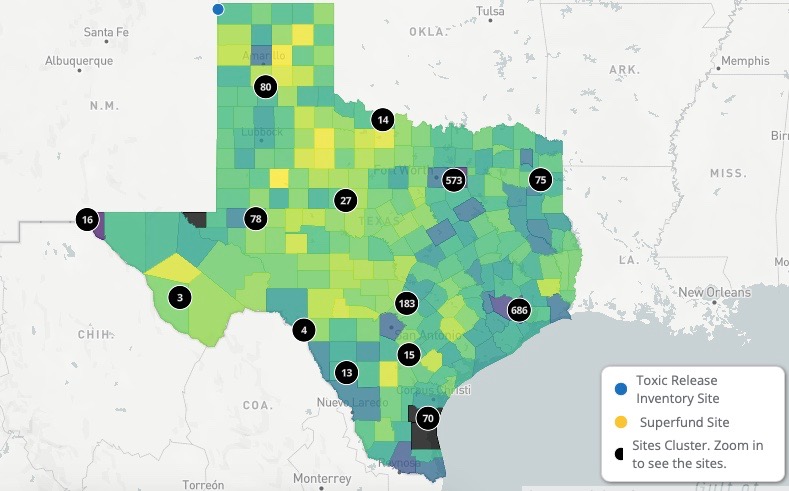
Environmental justice is central to tackling climate change. This interactive map identifies toxic facilities in Texas, giving each county an environmental justice risk score. The results indicate that communities of color are bearing the brunt of pollution. The map includes an option for Texans to add their personal stories.