
Reflections on Two Years of the IRA – August 2024
Author: KyungSun Lee, Climate advocacy Lab
August 10, 2024
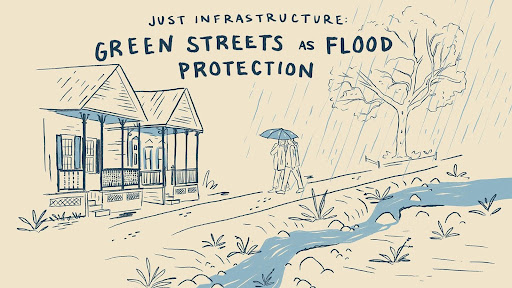
| Water Hub’s “Just Infrastructure” campaign features public illustrations, social media toolkits, and messaging guides for advocates to show our communities how we can leverage federal investments like the IRA for just and resilient infrastructure projects. |
When the IRA was first passed, we were faced with a profound and nuanced reality: while the IRA was the largest climate investment the country has ever seen, it was also rife with unacceptable compromises that favored fossil fuel industries over frontline communities.
At the Lab, we leaned into these challenges and opportunities, offering insights on how a community divided can still be united.
- We highlighted tactics to build durable power by combatting mis/dis information and expanding our base
- Demonstrated ways to leverage the latest IRA polling & messaging research to catalyze public awareness of the IRA’s benefits; and
- Launched new programs, including the IRA Data & Insights Hub and IRA Field Research Projects, to fortify collective learning, communication, and implementation efforts.
Two years in, we are building momentum for a just climate future through the IRA. Millennials are finding pathways into the clean energy workforce through the SolarCorps Program. Moms and students led by Moms Clean Air Force are advocating for electric school buses across the country. In 2023 alone, 3.4 million American families took advantage of IRA tax credits to lower the costs of clean energy and energy efficiency upgrades to their homes.
While the economic gains are clear, Lab members are also showing how we are building IRA momentum through our organizing, implementation, and communications efforts. Members like Resource Rural are building up local leaders to tell stories of the IRA’s benefits; Water Hub is infusing creative visualizations of just infrastructures that are being built from IRA and Bipartisan Infrastructure Law funds with their public illustrations and reel; and A–B is embracing culture to engage Black and Latinx audiences with IRA’s benefits in their “National Payback Day” Campaign, featuring IRA movie trailer ads in theaters across Arizona and Georgia.

A–B launched their “National Payback Day” campaign on August 16th, creatively making the IRA clean energy savings feel relevant, accessible, and real to Black and Latinx audiences between 18-40.
The Lab will also continue to grow the IRA Data & Insights Hub as a central base for the latest insights and resources on IRA communications and implementations efforts happening across the country. In the last 6 months alone, we’ve curated a library of IRA messaging advice, strategic advice, and polling, along with Insight Reports drawn from $4 million of ad spending data on IRA and clean energy campaigns and IRA organizing efforts across Wisconsin, Arizona, and Georgia, including recommendations on how to pair digital and in-person tactics to engage diverse audiences.
Where do we go from here?
The work continues. Over 61% of voters have still not heard much about the IRA. But we know this is only a short-term measure in the decade rollout of the IRA. People care about climate change and are seeing, hearing, smelling, and feeling the harmful effects of environmental changes everyday. In my reflections of the IRA work ahead, I keep coming back to the fact that I’ve been hearing many stories of how the IRA’s benefits are being brought to communities.
Yet as a movement, I strongly believe we need to tell more stories of how people who have historically been excluded from the movement, and people from underrepresented backgrounds are taking charge of IRA efforts today. I would therefore like to challenge all of us to root our work in three fundamental questions:
- How can we craft stories that inspire and sustain long-term engagement?
- How do we ensure everyone sees their role in this movement?
- How do we empower individuals to understand and harness their agency to expand the energy, job, housing, and funding choices available to us all?
I invite you to reflect on these questions as you prepare for the next season of organizing. I also invite you to connect with me to discuss how we can collaborate and support your strategy, training, and organizing efforts in the coming months.