Training For Impact
Insights & Reflections from Our First Five Cohorts
Introduction
The Climate Advocacy Lab wrapped up our fifth Training for Impact (TFI) Cohort in the spring of 2024, offering a natural opportunity for the Training team to pause and reflect on what we’ve learned over the past few years.
This document provides additional background information on the curriculum and structure of TFI as well as on how the program has grown and evolved to meet the needs of early-career environmental and climate justice leaders organizing in multiracial, cross-class, and intergenerational contexts.
Overview
Program Background & Structure
Curriculum Development: What Insights & Skills are Needed?
Prioritizing BIPOC Organizers and Climate Justice Campaigns
2022: Pivoting to a Hybrid, Regional Model
Common Barriers To Success & How We Worked to Address Them
Regional, Peer-to-Peer Caucus Spaces
Who leads Training For Impact?
There’s More!
This page is an abbreviated version of the complete report, which includes access to detailed curriculum and slide decks!
Program Background and Structure
In 2021, the Lab embarked on the journey of developing our first organizational strategic plan, a process that helped us orient all our programming around a few central questions:
- What are the insights, skills, and connections needed to build powerful multi-racial, cross-class movements?
- What approaches are most effective in equipping US climate advocates with these insights, skills, and connections?
- How do we track the impact of our capacity-building work vis-a-vis the success of the larger climate movement?
The Lab’s Training for Impact (TFI) program was born from a hypothesis (grounded, of course, in some evidence!) that our trainings would be more likely to have a lasting impact through a “peer learning cohort” model, focused on direct application of new insights and tools in participants’ existing organizing work.
Curriculum Development: What insights & skills are needed?
Based on learnings from previous trainings, input from the broader Lab community, and specific feedback from TFI participants, the TFI curriculum was designed around these focus areas.

-
Political education
Recognizing that the environmental movement had long been oriented around “carbon essentialism,” we wanted TFI participants to leave the program with a deeper understanding of how racial capitalism and other systems of oppression contribute to the climate crisis and intersecting challenges.
-
Critical capacities of powerful social movements
The TFI curriculum also reflected the Lab’s adoption of a “capacity-based” approach to building powerful movements, which emphasizes six critical capacities: Strategic, Organizing, Narrative, Disruptive, Electoral, and Institutional. Within each of those categories, our team identified a range of insights and skills necessary to build that particular capacity within the context of climate movement work and developed corresponding learning modules and activities.
-
Strategic planning & power analysis
Based on input from prospective participants, the TFI curriculum places a heavy focus on building “strategy capacity,” including how to develop a holistic power analysis and campaign strategy – based both on their organizational theory of change and positioning within potential coalitions and the larger climate movement.
Prioritizing BIPOC Organizers and Climate Justice Campaigns
From initial conception, we wanted the TFI cohorts to reflect a multiracial, cross-class climate movement and explicitly focused on recruiting early-career organizers who identified as BIPOC (Black, Indigenous, People of Color) and/or who were leading climate justice campaigns in historically marginalized communities.
As a result, the program was designed to support, develop, and address the specific needs of organizers of color.
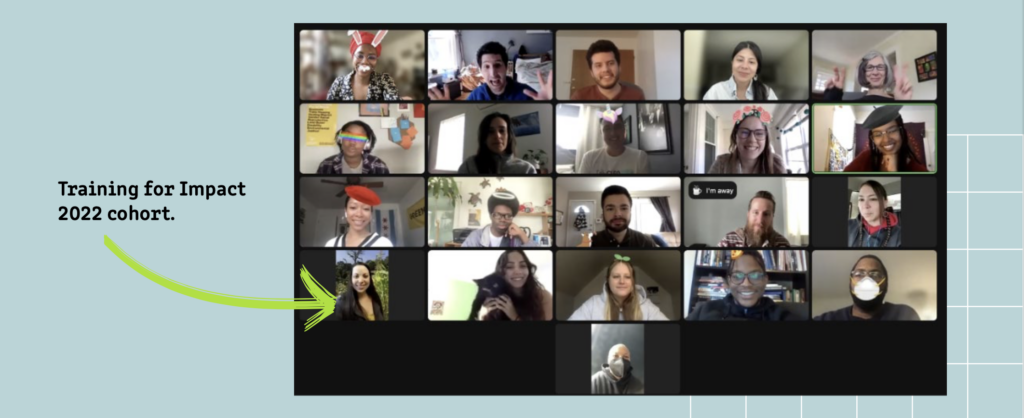
Empowered 90 emerging leaders from a diverse array of multiracial, cross-class organizations
View a full list of organizations here.



2022: Pivoting to a Hybrid, Regional Model
In the fall of 2022 – as the Lab prepared to launch our next TFI cohort – the Training Team took time to reconsider what structure would be best suited for potential participants in that moment.
We had noted from previous cohorts (as well as during our regular cadence of virtual trainings) that organizers were experiencing Zoom fatigue. We also heard from Lab members that they felt isolated and disconnected from the climate movement as a result of ongoing social distancing during the pandemic.
To address these challenges, we shifted the structure of TFI from a national, fully virtual cohort to a hybrid, regionally based cohort. Our hypothesis was that a hybrid model would foster deeper, enduring relationships and result in a more trusting and committed virtual learning community. We also believed narrowing the geographic focus would increase the likelihood that participants might have the opportunity to organize together on state/regional campaigns, and also allowed the Training Team to tailor content and strategic guidance.
We picked Texas and the Southwest as our first region of focus. In March of 2023, we hosted the first in-person TFI kick-off in Houston.
Key Insights from TFI
The Lab team has learned so much about the current needs and barriers facing early-career organizers through our past iterations of TFI cohorts, and we are eager to share them with other organizations within the climate justice space.
We hope these learnings can be utilized by other organizations to best support these organizers, grow their skills, and most importantly, keep them in the movement so we can continue building towards a liberated world together!
Within each category of learnings, we have pulled out key anecdotes that help exemplify the experience of TFI participants and their growth within the program.
Common Barriers to Success
Through our work with early career organizers, we have identified several significant barriers to success that our participants face:
(Note: **= represents a significant barrier identified by TFI participants)
-
Ageism**
Ageism remains a considerable challenge, impacting the credibility and opportunities available to younger organizers. Addressing this barrier requires a concerted effort to value the contributions of organizers of all ages.
-
Tokenization**
Many participants have experienced tokenization, which undermines their contributions and affects their sense of belonging. Creating more inclusive and respectful environments is crucial to ensure the success and sustainability of BIPOC organizers.
-
Imposter syndrome
Across cohorts, participants shared experiences of “imposter syndrome,” or the feeling that their age, race, or organizing skill level made them feel unqualified and/or unwelcome in movement spaces.
-
Lack of Core Organizing Skills
Many participants also expressed that they had not received training around core organizing skills, such as campaign planning and running 1-on-1s with volunteers. We made a concerted effort to address this through the TFI curriculum, but know that ongoing support and training is necessary to set early-career organizers up for long-term success.
Regional, Peer-to-Peer Caucus Spaces
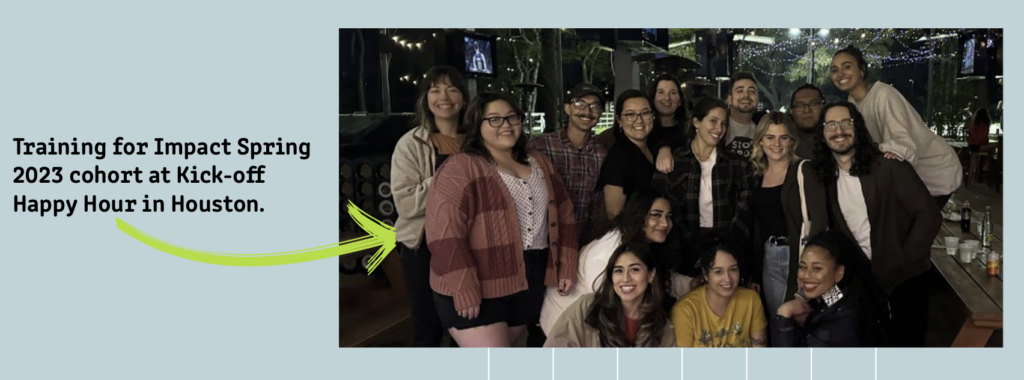
Especially emerging from COVID, we heard from participants that they were eager for spaces to connect with other early-career organizers. Building peer-to-peer caucus spaces through TFI helped each cohort build a collective identity by:
- Providing a safe environment for sharing experiences and strategies;
- Enhancing learning through the exchange of ideas and mutual support; and
- Promoting skill development tailored to the specific needs and challenges of participants.
In particular, the shift to a regional, hybrid cohort model in 2022 allowed the Training team to create localized learning spaces that helped:
- Ensure trainings were relevant to the specific cultural, social, and political context of the participants; and
- Facilitate stronger community ties and networks.
TFI’s focus on peer-to-peer learning spaces resulted in:
85% of participants reporting that they feel a “stronger sense of community and support, which has been essential for their professional growth”
80% of TFI participants having built “lasting professional relationships through the program”
60% increase in “collaborative projects and community initiatives.”
Check out the full report!
To read the remaining sections of this report, including: Our insights on Leadership Development, Targeted Skills-building, Strategic Planning and MORE!