
The Blueprint Training Cohort
Coalition resiliency in community
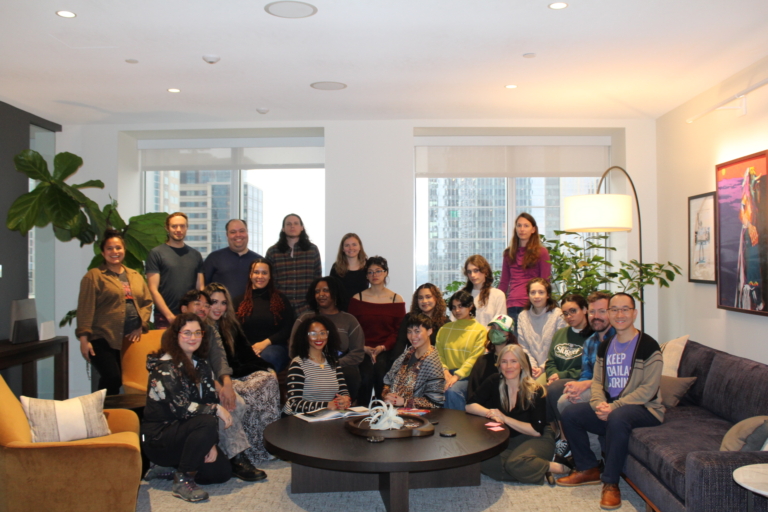
The MRXC Blueprint Training Cohort is a cohort-based training experience for climate advocates, organizers, and coalition leaders working to build stronger, more sustainable, and more aligned climate coalitions. Coalition work is essential to winning climate justice, but it is rarely simple. Leaders are often asked to hold strategy, relationships, decision-making, conflict management, coordination, and momentum across multiple fronts. The MRXC Blueprint Training Cohort is designed to support leaders in that complexity.
Over the course of the cohort, participants:
- Build practical skills
- Reflect on their current coalition challenges
- Learn alongside peers
- Receive coaching
- Leave with tools they can apply immediately in their coalition, campaign, network, or alliance
- This program is grounded in the Climate Advocacy Lab’s Blueprint for a Multiracial, Cross-Class Climate Movement (MRXC) and is designed for leaders who are working to build climate coalitions that are strategic, relational, justice-centered, and durable.
Who the Cohort Is For
The MRXC Blueprint Training Cohort is designed for climate movement leaders who work across organizations, communities, geographies, sectors, or issue areas.
Participants do not need to have a perfect coalition structure in place. In fact, the cohort is especially useful for leaders who are trying to bring more clarity to coalition work that already feels complex.
This program may be a strong fit if you are asking questions like:
- How do we build trust across organizations with different priorities, capacities, and histories?
- How do we make decisions in a way that is clear, equitable, and accountable?
- How do we keep people engaged when coalition work feels slow, messy, or under-resourced?
- How do we navigate conflict without abandoning relationships or avoiding hard conversations?
- How do we move from shared values to shared strategy?
- How do we build a coalition culture that can hold complexity and still take action?
Preference may be given to participants who apply with a colleague, so they can practice and implement what they learn together.
What Participants Will Learn
Inside the MRXC Blueprint curriculum, participants will learn how to diagnose, strengthen, and sustain the core functions of climate coalition work. Participants will explore:
- Coalition fundamentals: Participants will examine what makes coalition work distinct from organizational work, campaign work, and general partnership work. They will explore the purpose of coalitions, common coalition structures, and the strategic role coalitions can play in building power across the climate movement.
- Strategic culture: Participants will learn how coalition culture shapes participation, trust, decision-making, conflict, and momentum. The cohort will support participants in identifying the formal and informal practices that shape how their coalition functions day to day.
- Shared goals and alignment: Participants will practice identifying common goals, clarifying shared purpose, and understanding where alignment exists or needs to be strengthened. This includes exploring how coalitions can hold different organizational priorities while still moving toward collective impact.
- Governance and decision-making: Participants will examine how decisions are made in coalitions, who has influence, where confusion shows up, and how to build clearer decision-making processes. The cohort will offer tools for improving transparency, accountability, and participation.
- Inclusion, power, and resources: Participants will reflect on how power, identity, organizational capacity, funding, geography, and access shape coalition participation. The cohort will help leaders identify where inequities may be showing up and what practices can support more inclusive and justice-centered coalition work.
- Conflict management and repair: Participants will learn how to approach conflict as a normal and necessary part of coalition work. The cohort will provide frameworks for understanding conflict, identifying patterns, supporting repair, and maintaining relationships while addressing real concerns.
- Momentum and cohesion: Participants will explore how coalitions maintain energy, connection, and participation over time. This includes practices for sustaining engagement, creating shared ownership, and preventing coalition work from becoming extractive or overly dependent on a few people.
- Evaluation and learning: Participants will learn how to assess coalition health and track progress. The cohort will support participants in developing a learning orientation that strengthens both strategy and relationships.
The Participant Journey
The MRXC Blueprint Training Cohort is designed as a connected learning journey, not a series of disconnected trainings. Each component builds on the last so participants can move from reflection to practice to implementation.
1. Application and selection
Applicants are invited to share information about their current role, coalition context, goals for participation, and the challenges they are hoping to work through. The application process helps ensure the cohort includes participants who are ready to contribute to a dynamic peer learning environment.
2. In-person kickoff
The cohort begins with a three-day in-person kickoff retreat where participants meet one another, build trust, establish learning goals, and begin exploring coalition fundamentals and strategic culture.
The kickoff creates a foundation for the rest of the cohort by helping participants understand each other’s coalition contexts, build relationships across the group, and begin applying MRXC Blueprint concepts to their own work.
3. Virtual training sessions
After the kickoff, participants join monthly virtual training sessions focused on core coalition capacities. These sessions combine teaching, discussion, reflection, and applied practice.
Each training is designed to help participants understand a key coalition challenge, examine how it shows up in their own work, and leave with tools they can use immediately.
4. Optional recitation sessions
Participants will have access to optional work sessions where they can continue applying cohort tools to their own coalition context. These sessions provide time for reflection, peer support, troubleshooting, and implementation planning.
5. Personalized coaching
Participants receive personalized coaching with a Lab staff trainer. Coaching calls give participants space to talk through their specific coalition challenges and receive support applying cohort concepts in real time.
6. Peer learning and reflection
Throughout the cohort, participants learn from one another’s experiences via a shared online learning space in Slack. Peer learning is central to the model because coalition leaders often face similar challenges in different contexts. Participants will have opportunities to share what they are trying, what is working, where they feel stuck, and what they are learning along the way.
7. Final presentations and implementation planning
The cohort concludes with participant presentations focused on how their understanding has shifted, what tools they plan to use, and how they will continue strengthening their coalition after the cohort ends.
Curriculum at a Glance
Session 1: Coalition Fundamentals and Strategic Culture
Participants will explore the purpose of coalition work and the conditions that help coalitions function well. This session introduces key MRXC Blueprint concepts and invites participants to reflect on their coalition’s current culture, strengths, tensions, and opportunities for growth. Participants will leave with a clearer understanding of their coalition’s purpose, structure, and current strategic culture.
Session 2: Inclusion, Governance, and Resources
Participants will examine how power, participation, capacity, and resources shape coalition work. This session supports participants in identifying who is included, who has influence, how decisions are made, and where governance structures may need more clarity. Participants will leave with tools to assess participation, clarify roles, and strengthen governance practices.
Session 3: Conflict Management and Accountability
Participants will explore conflict as a normal part of coalition life. This session helps participants identify common conflict patterns, distinguish between productive and harmful conflict, and practice approaches that support accountability, repair, and relationship preservation. Participants will leave with tools for naming conflict, preparing for hard conversations, and supporting repair.
Session 4: Decision Making and Evaluation
Participants will examine how coalitions make decisions and how they know whether their work is effective. This session supports participants in clarifying decision points, improving transparency, and developing practices for reflection, evaluation, and shared learning. Participants will leave with tools for decision mapping, evaluation, and coalition learning.
Session 5: Peer Presentations and Closeout
Participants will share what they have learned, what they have tried, and what they plan to carry forward. The closeout session creates space for reflection, celebration, peer feedback, and implementation planning. Participants will leave with a clearer plan for applying MRXC Blueprint tools in their coalition work after the cohort ends.
Our Training Model
The MRXC Blueprint Training Cohort uses a learning model that combines training, reflection, coaching, peer exchange, and applied practice.
- Practical: Participants leave each session with tools they can use immediately. The cohort focuses on real coalition challenges, not abstract theory alone.
- Reflective: Participants are invited to examine how coalition dynamics show up in their own context, including patterns related to power, trust, decision-making, conflict, and participation.
- Peer based: The cohort creates a learning community where participants can learn with and from others doing similar work across the climate movement.
- Justice-centered: The cohort is grounded in a commitment to multiracial, cross-class, intersectional climate organizing. Participants will explore how equity and justice shape coalition structure, culture, and strategy.
- Applied: Participants are encouraged to bring what they learn back to their coalition throughout the cohort. Each session includes opportunities to translate learning into concrete next steps.
- Supportive: The cohort is designed to be rigorous and relational. Participants are invited to bring honesty, curiosity, humility, and care into the learning space.
Coaching May Support Participants With:
Coaching is a core part of the Training Cohort. While trainings introduce concepts and tools, coaching helps participants apply those tools to their current work and the real conditions of their coalition. Each participant will have access to personalized coaching with a Lab staff trainer to support reflection, troubleshooting, and implementation.
Coaching May Support Participants With:
- Understanding a current coalition challenge
- Preparing for a difficult conversation
- Clarifying roles, decision making, or governance issues
- Thinking through conflict or repair
- Applying a Blueprint tool to their coalition context
- Identifying next steps after a training session
- Building confidence in their leadership role
Coaching is not about having the perfect answer. It is a space for participants to slow down, reflect, and receive support as they navigate the complexity of coalition work.