
IRA Digital Campaign Lessons from the Field – Sept 2024
September 10, 2024
Lessons from digital strategists on building persuasive & creative IRA campaigns…
This month we talked to two experienced digital campaigners to bring you behind the scenes on their digital IRA campaigns. With IRA awareness still low among voters, Maddie Kriger at Climate Power and Joseph Huff-Hannon at A–B share their insights on how they’re bolstering awareness of the IRA’s impacts and benefits to the public by testing different messages across various formats, from videos to GIFs.
1. Climate Power: Activating Voters
Climate Power is leveraging their in-house creatives, researchers, and strategists to run large-scale digital IRA ad campaigns.
 We spoke with Maddie Kriger, their Senior Advisor for Voter Programs, who is a seasoned comms strategist with a background in paid media. She leads Climate Power’s paid digital communications efforts to get the public excited about the IRA and its impacts on people’s lives and communities, and how people can protect the jobs, cost savings, and increased protections for our air and water that the IRA has made possible.
The Secret Sauce: What goes into building successful campaigns?
🍝 Underpin everything with audience research. Climate Power’s Research team gathers the hard numbers on the IRA’s impacts. This research is then paired with research from their Polling team, who investigates what aspects of the IRA people care most about, and what aspects people don’t know much about. Climate Power has generally found that the pieces of the IRA that people are most excited about are also some of the least well known or understood – and that is why educating them on the impact the law is already making can be so effective.
🍝 Test the ad ingredients. Maddie leads paid media research to ensure the IRA ads contain the right messaging ingredients that will perform best in their campaigns. The team conducts pre-flight tests of messaging and individual ads through a combination of polling and randomized controlled trials. For example, they will run 10 ads with different tones and messages they think will persuade key audiences on the IRA’s positive impacts; they then compare these results with a control group who do not see the ads.
While they often make ads tailored to particular audiences, they tend to find that the most effective ads educating people about the IRA are effective for all audiences, rather than each smaller targeted group requiring very particular messaging. Everyone likes creating jobs and lowering costs!
🍝 Measuring beyond click-through-rates. While Climate Power does look at typical ad campaign performance metrics, they know that changing hearts and minds is not necessarily measured by a click. With online campaigns, Maddie says, engagement is necessary – you definitely need people to see your content for it to work – but it’s not sufficient. That is why they do so much measurement on the front end, before any ad is shown to a single social media user.
It is also why they pair paid campaigns with a cross-cutting effort to shape the narrative around the IRA – from the press to online creators to supporting educational work by news publications. Finally, Maddie says, they also incorporate a control into the live ad campaigns themselves – generally by randomly selecting a set of zip codes to not receive advertising – which enables them to track the change in public opinion about the IRA in areas where their ads are running compared to areas where they are not. (It can be hard to measure this kind of shift, but valuable for informing future strategy.)
Takeaways: What types of IRA content are resonating with audiences?
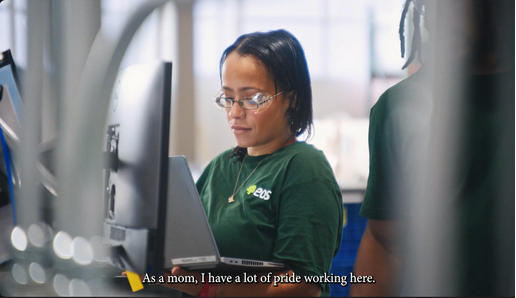
🌏 Messengers with relatable stories. Maddie shares that we can have an expansive definition of what we mean by “people like us.” They find that their messengers don’t necessarily need to look like the audience they’re trying to reach, or even live in the same place. It’s more important for the messenger to have a relatable situation.
For example, Climate Power spoke to Fred, a high school teacher in Dewitt, MI about how he was able to afford to install solar panels on his house thanks to the Clean Energy Plan. Although he is a white, married teacher from Michigan, Fred’s story was most persuasive to young Black and Latino voters, and worked across all states where it was tested.
✊🏼 Heroes and villains. Hypotheticals with a far off future are difficult for people to grasp. Climate Power finds ads featuring real people telling the story of how the IRA has already changed their lives (like Fred!) are the most consistent top performers. On the flip side, they contrast these storytellers with the villains who are trying to take away our hard-fought progress. They use “Big Oil,” “corporate polluters,” or “oil & gas executives” and more recently, naming Project 2025 (or the Big Oil execs who crafted it) as a clear villain, especially as it has become more well-known on social media.
💗 Climate+health+jobs+costs. Overall, Climate Power finds the majority of their audiences are most persuaded by messages connecting the IRA to its impacts on creating good-paying jobs, lowering costs and electricity bills, and strengthening protections to keep corporations from polluting our air and water.
Takeaways: What advice do you have for other digital IRA campaigns?
✅ Right-size your ambitions with your budget. Maddie emphasizes that building up awareness and knowledge about a topic takes repetition of the same messages over a significant period of time. From her own experience, she finds it takes 10–20 impressions for someone to remember something (although the best level of repetition can vary based on the media environment!). She advises against showing one ad and moving on to another audience. Instead, she notes it’s important to set the right audience size so you can target them multiple times.
💰Higher production value doesn’t always mean higher engagement. Maddie found the more ads looked like ads, aka higher production value, the more likely people scrolled past them. On the flip side, working with content creators who are filming from their bedrooms have also sometimes backfired because the content didn’t appear reliable. She shares, it’s therefore important to balance having a clean, professional look without it being overproduced.
2. A–B: The Power of Creative
 As a BIPOC-led, BIPOC-majority creative agency, A–B works with the progressive movement to build creative, persuasion campaigns that draw from fashion, street style, music, and culture.
We spoke with Joseph Huff-Hannon, their Senior Campaign Director, who is a seasoned writer, campaigner, and storyteller at the intersection of politics, social movements, and media. He is one of the leads on the agency’s national “Payback Campaign” boosting awareness about the IRA’s benefits among audiences who are most likely to support the IRA but don’t know much about the policy. The team’s approach is to generate excitement about the IRA’s clean energy savings and cash back benefits, with younger (18-40), BIPOC audiences, through culture-forward, “non-wonky”, splashy ads and interventions.
The Secret Sauce: What goes into building successful campaigns?
🍝 The power of scale. After conducting extensive message testing, A–B did a soft launch of the “Payback” campaign in Arizona, Georgia, and Nevada highlighting stories from local advocacy groups. They built messages that were high-energy and exciting, emphasizing stories of how moms in Arizona won electric school buses for their kids, and churches in Georgia were going solar, with well-deserved paybacks from the IRA.
On the IRA’s 2nd Anniversary, they then launched their campaign nationally with expanded tactics, including new movie trailer style trivia ads about the IRA; CGI “projections” in DC targeting the Heritage Foundation’s Project 2025; and a range of digital ads identifying the villains and heroes of the IRA.
🍝 Leveraging detailed audience insights. Joseph shares that the team’s expertise lies in their ability to conduct detailed research on BIPOC audiences. As a BIPOC-led, majority POC agency, A–B leveraged in-house expertise, and IRA message tests, to shape messages that would establish a baseline about how the IRA relates to their target audiences’ interests and concerns.
The Content: What messages are resonating?
💪🏾 “This is for us, made possible by us.” A–B wanted to build a campaign around the idea that “we deserve good things”. They not only wanted people to know about the IRA’s benefits, but also cultivate a sense of ownership of the IRA, by emphasizing messages that these benefits and investments were made possible by the young people and communities of color who showed up to vote in 2020, and set the stage for the passage of the IRA. We LITERALLY made this possible.
 😠 Name the villains. Joseph spoke to the fact that even though inflation is coming down, people still feel broke. So the campaign makes sure to pair their “payback” messages with messages that name the villains who are trying to take these benefits away and harm us, aka “greedy fossil industries who are keeping us addicted to gas, polluting our neighborhoods, and killing our kids”.
🌱 Climate is in the fine print. For this particular campaign, the team found that the climate crisis is the tertiary message for A–B’s target audiences. Instead, leading with how the IRA can be an engine for savings, good jobs, and money in people’s pockets is having a bigger persuasive and mobilizing impact on younger (18-40), BIPOC audiences.
The Takeaways: What advice do you have for other digital campaigns?
 😎 Make it bold & see what sticks. Joseph shared that A–B is experimenting with different formats to evaluate what is captivating people’s attention and persuading them to get their IRA rebates. They’ve adapted their topline IRA messages as movie trailer quiz ads being played in targeted theaters; partnering with local influencers and content creators; a series of 15-second, punchy ad videos, which they find is their sweet spot to engaging younger (18-40), BIPOC audiences.
They’ve reached over 10 million in Arizona, Georgia and Nevada to date this fall, and have big plans to double their reach through the end of the year with multiple touchpoints and splashy new campaign activations that urge audiences to “protect your payback” by voting to keep fossil fuel funded cronies out of our lives.
📣 Keep your topline message consistent. Joseph spoke to the fact that in their process of scaling their campaign from local to national, they’re keeping their topline messages consistent. They did some tailoring to make the context relevant to their target audiences’. For example, ads in Georgia speak to the new solar and battery jobs created from IRA investments, or local churches going solar with IRA rebates. In Nevada the Payback campaign is collaborating with Make the Road Nevada to complement their campaign calling out the greedy local monopoly utility company, NV Energy. Otherwise they keep their high-level messaging consistent throughout: we all deserve our paybacks. That’s how democracy is supposed to work!
How the movement can leverage digital ad insights
Digital campaigns are powerful tools to raise awareness, drive persuasion, and build support for the IRA. Ads can especially be effective in establishing a baseline for the IRA’s positive impacts to audiences who are not yet familiar with the policy but are likely to support its provisions. Above all, when reaching audiences through digital, Maddie and Joseph make it clear that research and evidence are the foundations of the stories and messaging used in their campaigns.
At the Lab, we believe evidence-based advocacy is how we build durable power and win equitable solutions for a just future. As you continue to organize and mobilize support for the IRA at the doors and online, be sure to check out our May IRA Insights Report and Online and Offline Organizing Strategies. These resources will guide you in blending digital and in-person organizing and communications approaches to reach and expand your base.
Connect With Us
If you are working on IRA communications, story-telling, and organizing efforts, we’d love to connect with you to see how we can support your efforts. We have a diverse array of free training, thought partnership, and coaching programs to bolster our movement’s efforts around the IRA. Reach out to KyungSun, Senior IRA Program Manager to learn more.
If you are running digital IRA ads, we’d love to partner with you to grow our community knowledge base of insights and trends emerging across IRA ads. If you’d like to learn more, reach out to KyungSun, Senior IRA Program Manager, and we’ll get the ball rolling.
Have other IRA campaigns, reports, or research work you want to share? Get in touch and we’d love to learn more about your efforts and get you connected with peers across our growing Lab community of 4,000+ climate advocates and researchers.
Additional Resources
How Michigan’s Climate Legislation Package is a Leading Formula for Climate Progress
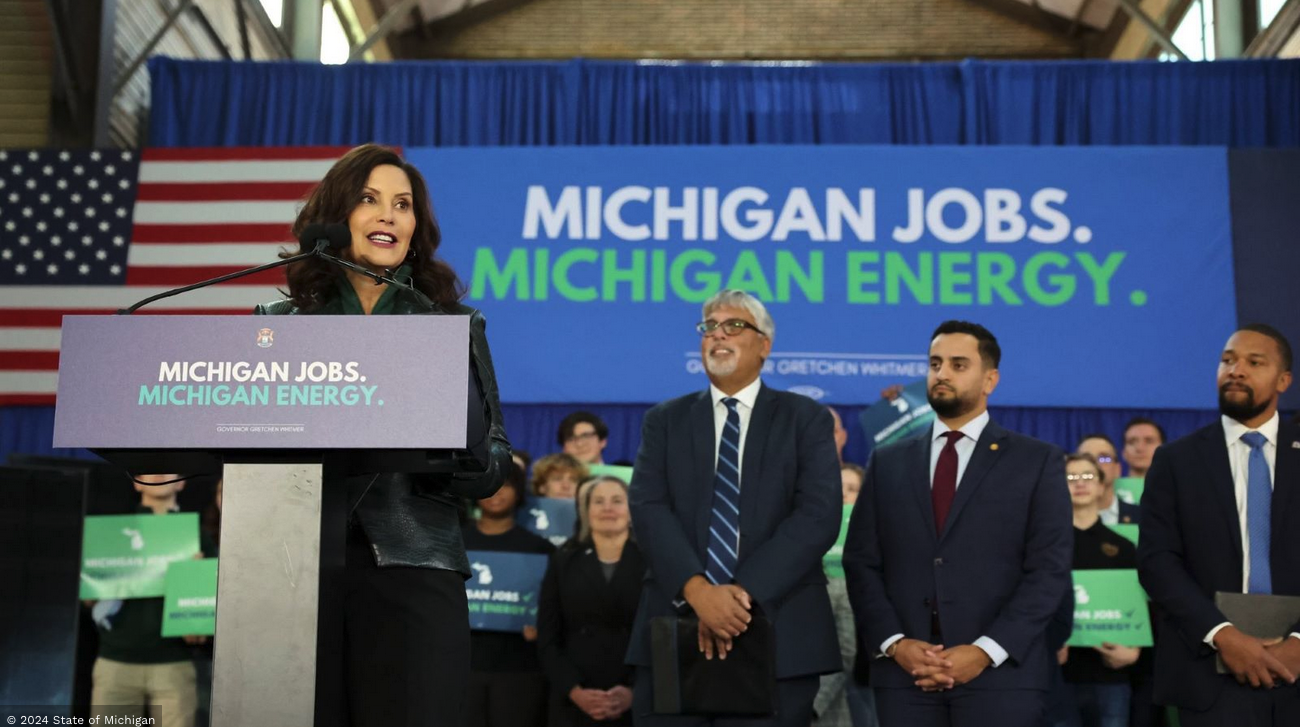
Michigan’s economy is surging, supercharged by the Inflation Reduction Act and a suite of nation-leading clean energy bills passed by the Michigan state government last November. Michigan now has more clean energy projects than any other state and is ranked fourth in the country for new clean energy jobs. Clean energy businesses, which are creating jobs and growing the state’s workforce, are the first to say it: They are planting their stakes in Michigan, largely thanks to strong climate policies. The latest analysis from 5 Lakes Energy (PDF) shows that the state’s climate legislation package, in tandem with the IRA, goes way beyond cutting climate pollution. It will create an economy-wide change by saving Michigan families hundreds of dollars in energy bills, bringing more clean energy jobs and investments into the state, and protecting communities from the harmful effects of pollution.
How the Biden Investments are Changing America

The “Volts” podcast brings you an episode exploring the Biden administration’s ambitious industrial investment strategy with Heather Boushey, a member of the President’s Council of Economic Advisors and chief economist for his Invest in America Cabinet.
A Comprehensive IRA Pitch Toolkit

As the American public still knows little about the law and provisions, the weeks following the IRA’s Anniversary on August 16th are opportunities to draw attention to the benefits it is bringing to communities now. Leverage this pitch toolkits for ideas, providing reporters with recaps of local investments and local sources. In addition to promoting, or re-promoting, specific projects and programs, focus on jobs, action on climate change, Justice40–and support for communities of color, health benefits of clean energy/transportation efforts…and jobs and more jobs. This toolkit includes several updated jobs numbers/reports to choose from.
Help Center
How Do I Get Involved?
The data and insights in this Hub gets better with more participation, and if you are here, the chances are pretty good that you’ve got something to contribute. There are a variety of ways you can get involved, from contributing ad data, to sharing reports you are creating with your own polling or focus groups. Let’s have a conversation about how you can contribute to our effort. Reach us by email here, and we’ll get the ball rolling.
Data FAQs
Wow, that’s a lot of data. You are probably curious about how we’re handling it and how we’re keeping it secure. We’ve got a document for you! Check out our data FAQ here.
Name Generator
We have created this name generator that can be used by those running ads to create file names for the ad data they are sending to us; doing so will provide consistent naming conventions that will convey to us useful information on the digital ads, enhancing in turn the insights we can offer back to you all.
- Why? Following discussions with others working on the IRA, there has been a demand for more in-depth analysis of ad performance based on multiple factors (like audience and message type). We’ve pinpointed the priority factors to measure, and this name generator will enable us to analyze them across all ads.
- Who is this relevant for? So we can collect the most extensive, useful and accurate insights, we would love for any organizations running ads (with any size budgets) to use the generator to name the files they send us.
- How to get involved? Simply duplicate this doc and follow the instructions in the guide and start generating your file names! If you’ve got questions, you can reach us here.
We want to hear from you!
Have any questions or comments about the data? Have datapoints you think we should consider? Contact us here and let us know.
A special thank you
We would like to extend a special thank you to 89up, our partners in the Hub until August of this year. We are grateful for their time, energy, and expertise in launching and building the Hub.